This article is also available in PDF format.
|
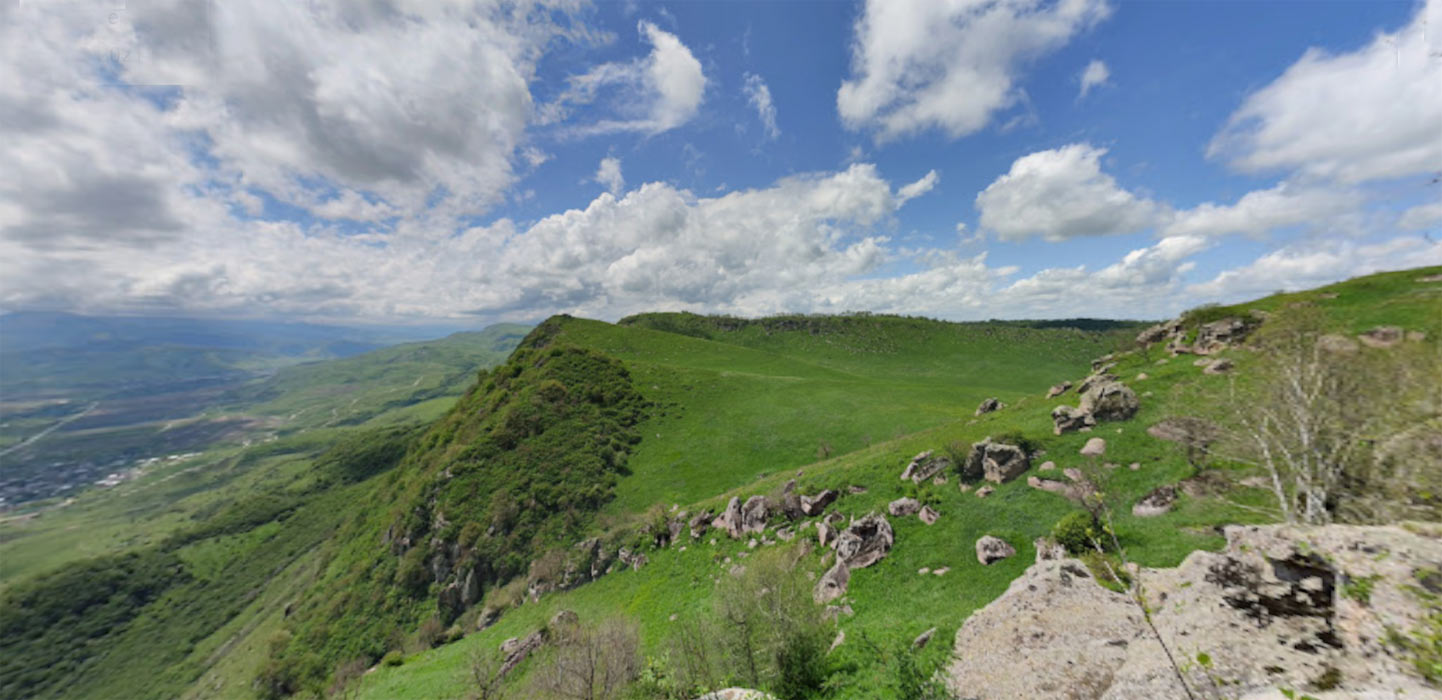
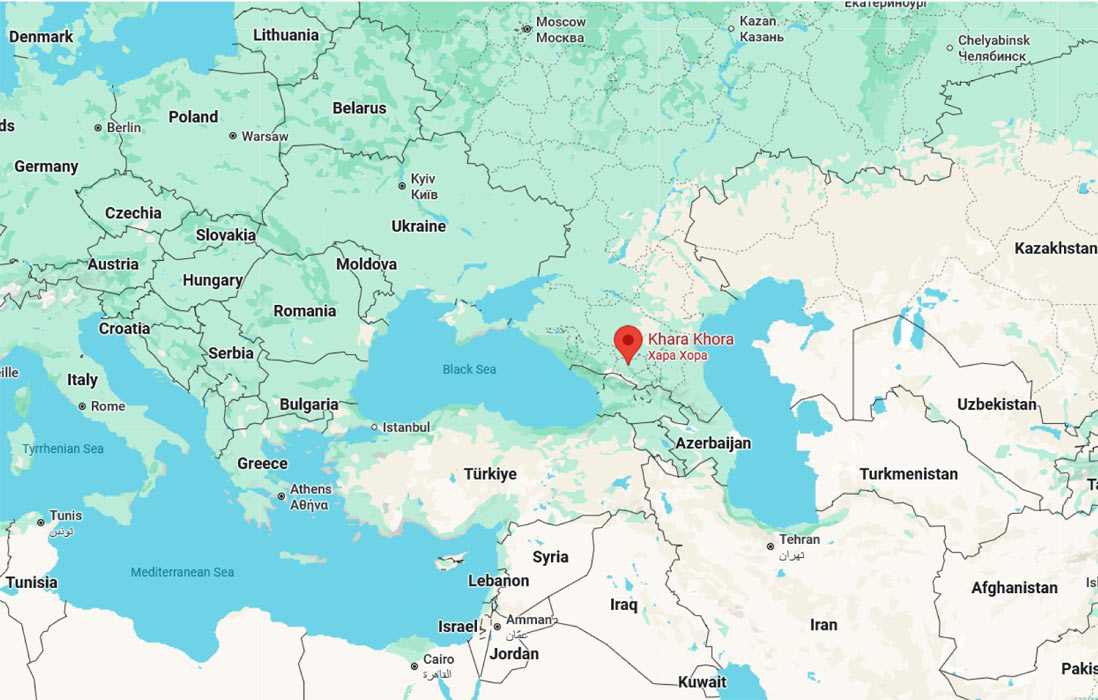
The Caucasus or Caucasia is a region spanning Eastern Europe and Western Asia. It is situated between the Black Sea and the Caspian Sea. There are Caucacian legends that tell of mysterious underground cities built in the depths of Mount Khara-hora in Russia, with tales of Bigfoot, and legends of giants. In 2011, Arthur Zhemukhov, a Russian speleologist, made an astonishing discovery on the peak of Khara-Hora (also called Hara-Khor) mountain in the North Caucasus region of the Kabardino-Balkaria Republic of the Russian Federation, near the village of Zayukovo, in the Baksan Gorge.
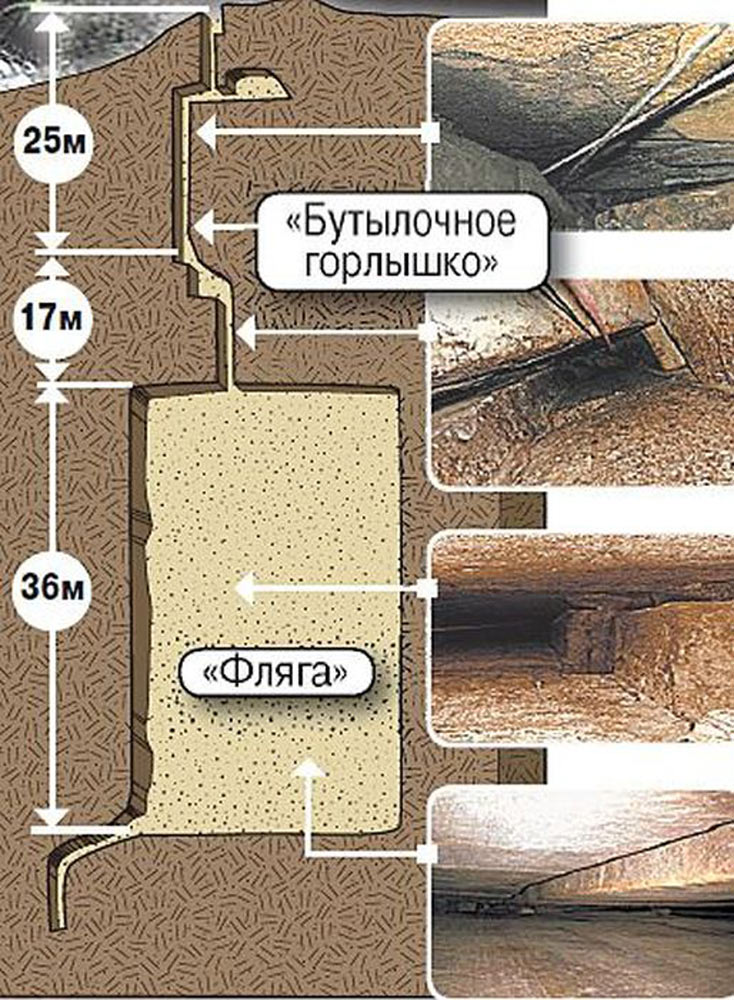
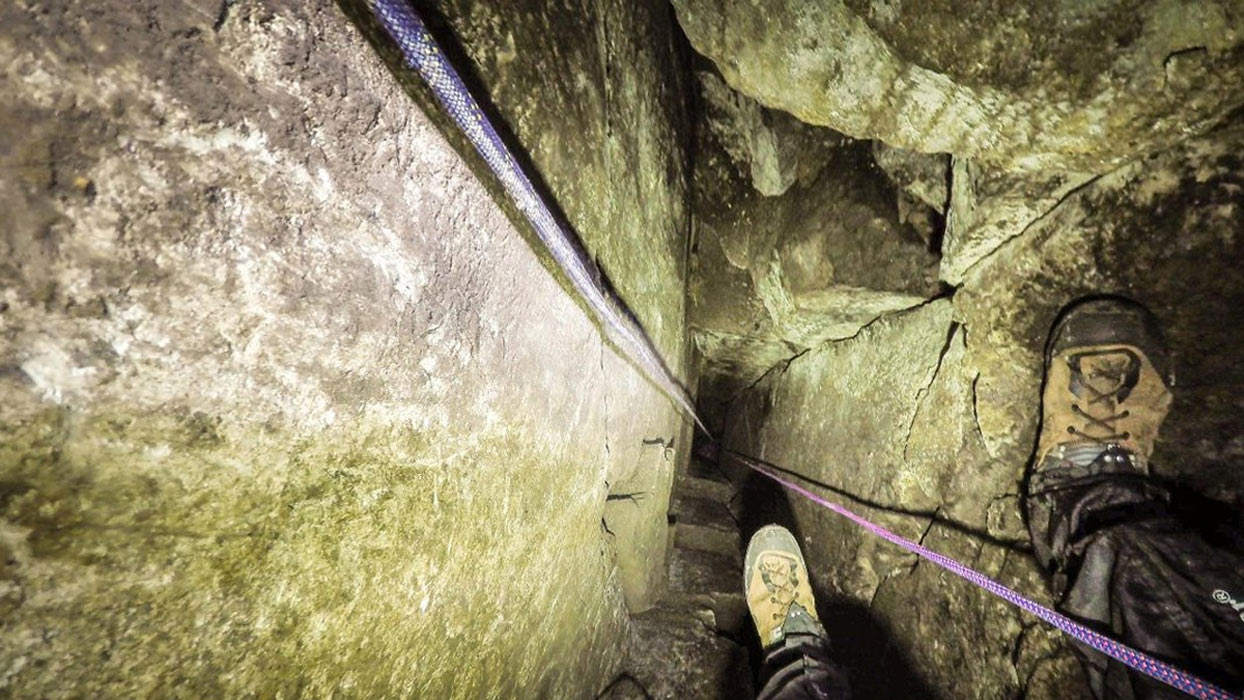
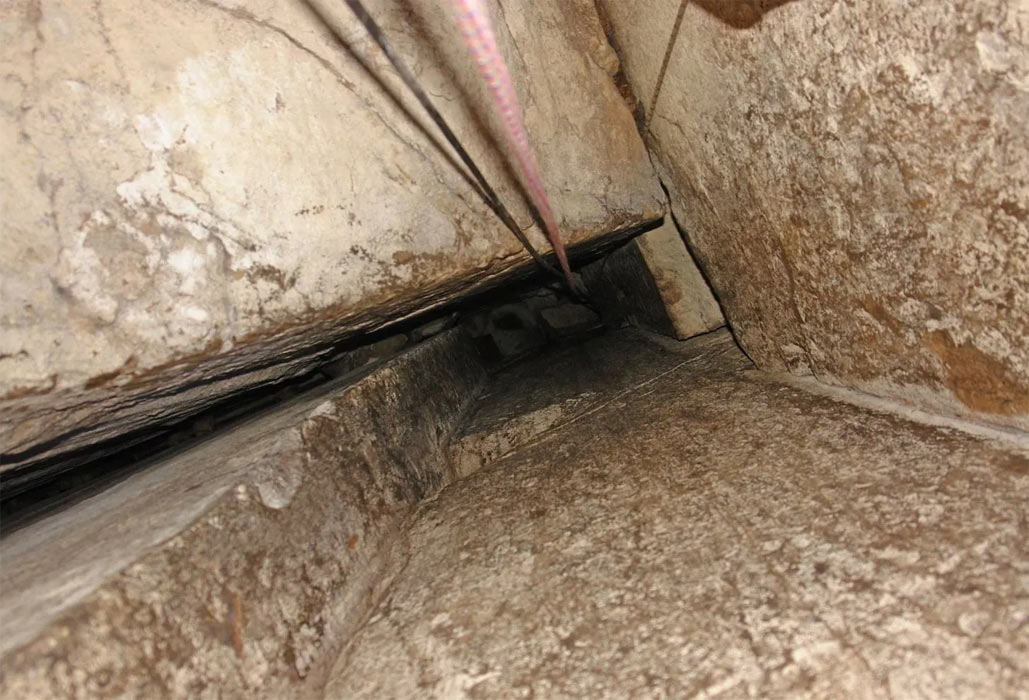
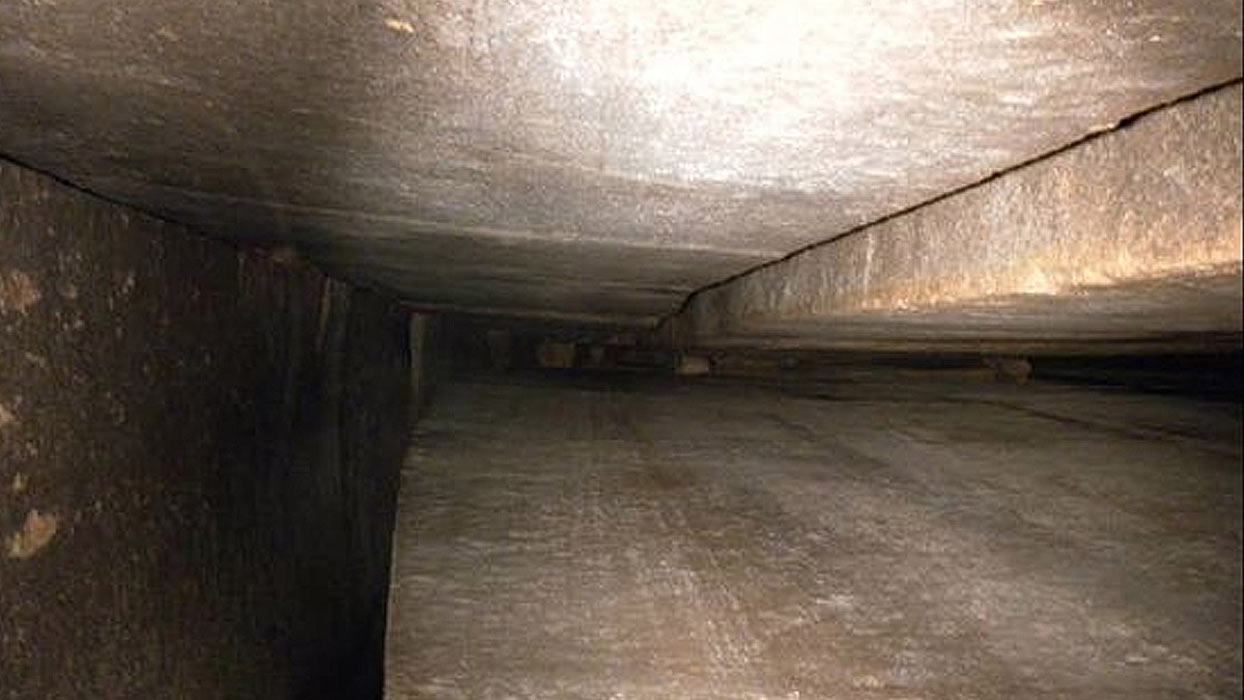
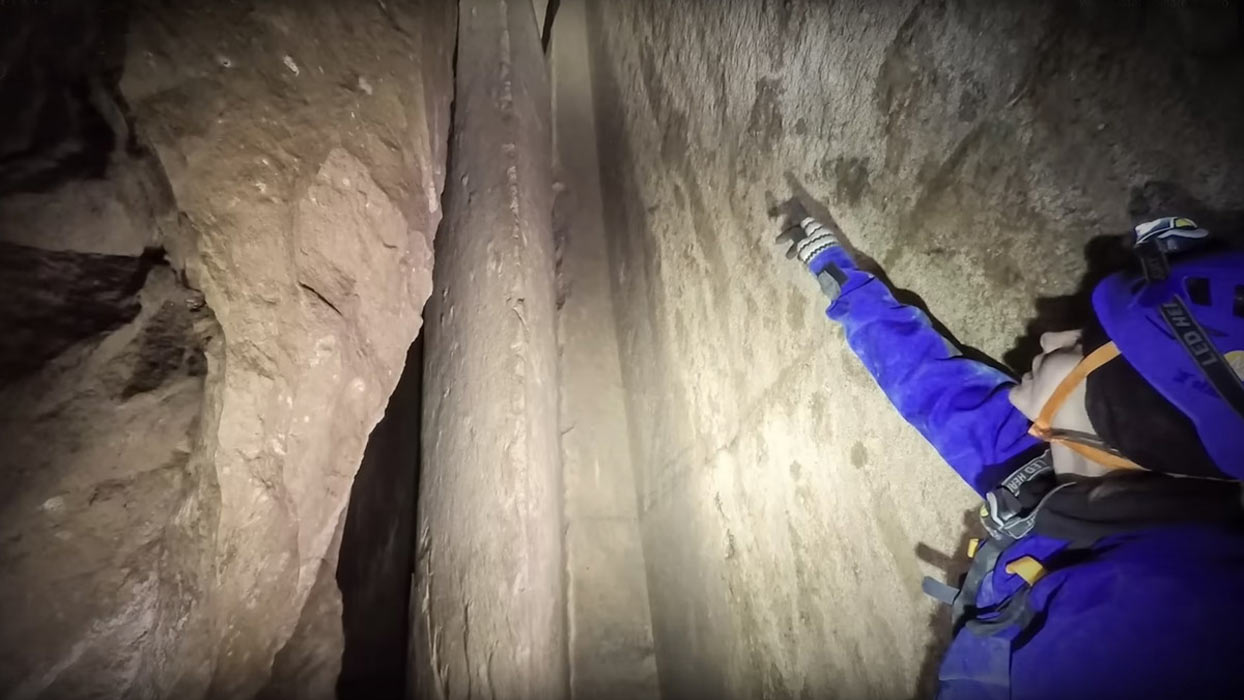
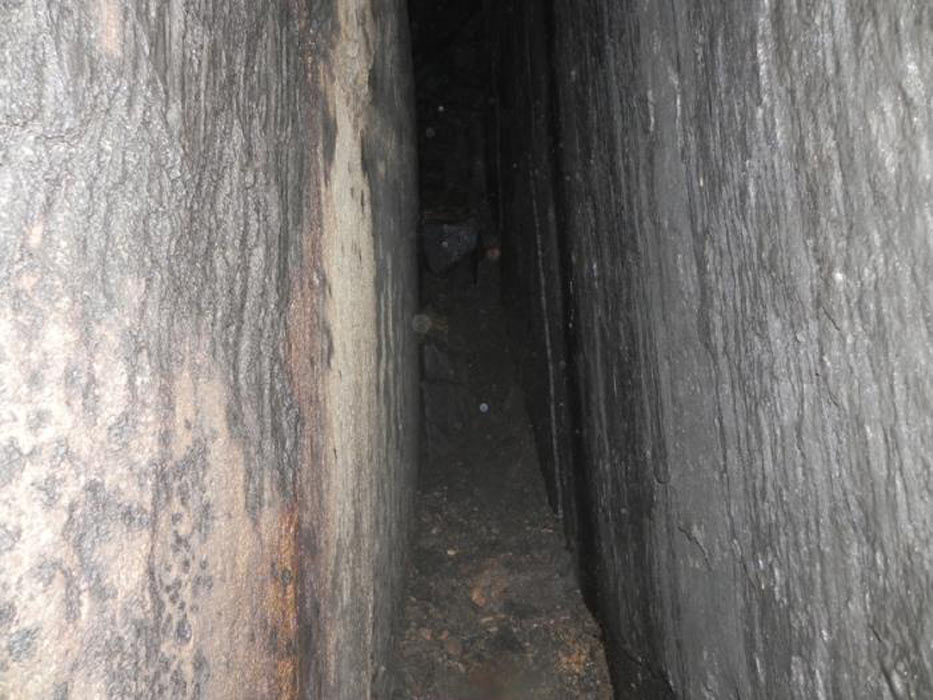
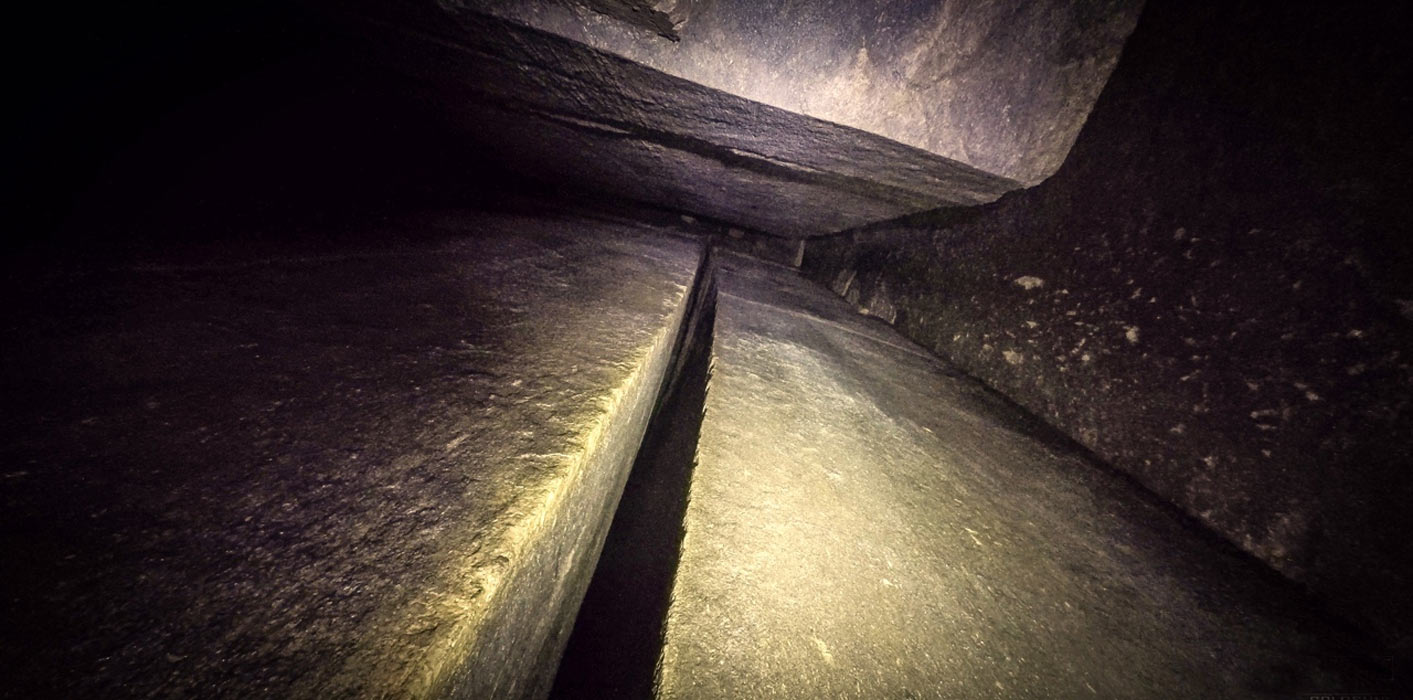
The Khara Hora mountain. On the left side is the village of Zayukovo. Local residents had discovered a small hole in the mountain after a land slide. The hole led to a large, deep shaft in the mountain. The entrance is very narrow, about 30 centimeters in diameter. One of the aksakal (i.e. senior leaders of the tribal communities of the Caucasus) admitted that there is a place in the Baksan gorge, whose name from Kabardian is translated as "Old City". This city, according to them, was located both above and below ground. An elder recalled that, when he was a child, some young people had entered the huge underground city with squares, streets and houses, but no trace of people. There was a underground river which leads to the central square, in the middle of which there is a kind of monument: something like a sacred stone in the center of the settlement. The shaft is deep, narrow, and made of perfectly geometric, parallel, polished stone slabs, showing signs of being artificial. The walls are straight, extending 40 meters deep into the mountain before opening into a large underground chamber. The walls of this shaft were constructed with large megalithic blocks that fit together at right angles with incredible precision. The entire length of the shaft (the part that was explored) from the upper part all the way to the lower platform, spans more then 100 meters (350 feet). This pre-historic structure is undoubtedly an artificial construction of a large scale. The first section of perfectly straight and polished narrow walls go 40 meters (130 feet) deep into the mountain. Arthur Zhemukhov noted that the polished walls made of megalithic blocks were very similar to those found at the shafts of the Egyptian pyramids, precisely the Grand Gallery at the Pyramid of Khufu, the blocks of which are approximately the same size. As with the advanced ancient structures of Egypt, this ancient gallery also most likely served some kind of advanced technological function, and is probably part of a larger structure. There are additional chambers and channels that go much deeper underground, which are still unexplored. At lower levels they ran into narrow passages in which they couldn't enter. It is obvious that it is man-made, as there were no analogs anywhere among other cave systems of the world. Some of the stone blocks weight up to 200 tons, and fit together perfectly. They are too smooth to have been cut with primitive tools, and they shows signs of the use of machinery. It is unlikely that this structure was cut into the mountain. It is more likely that the mountain is actually an ancient pyramid, at least what remains of it, now buried under ages of soil and vegetation, or another large construction.
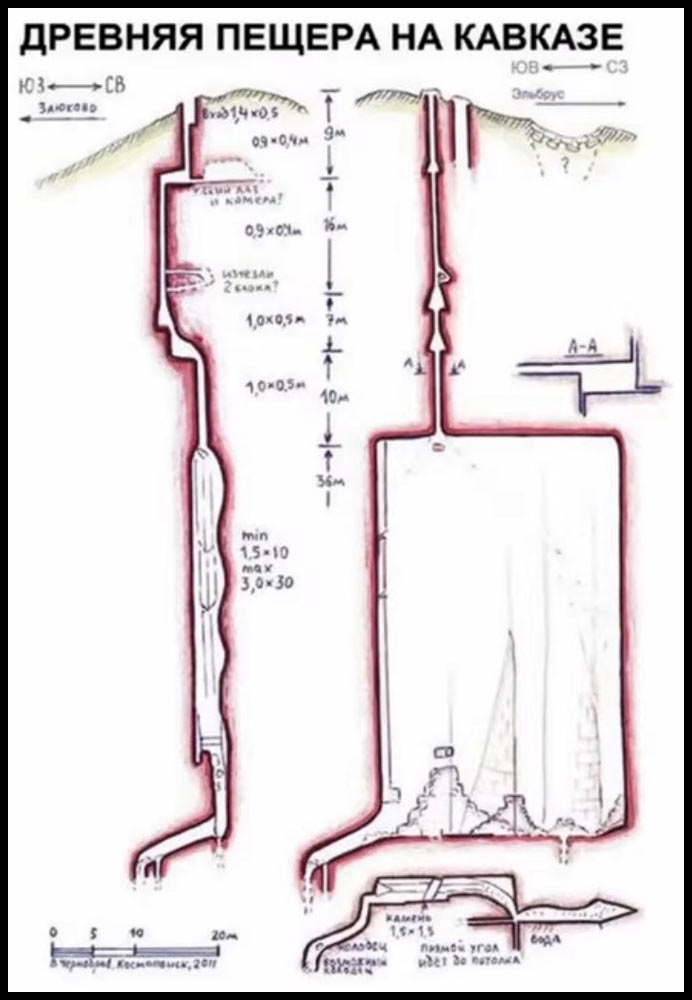
Additional expeditions inside the shaft were made by Vadim Chernobrov, head of the Kosmopoisk, which is an organization that researches different anomalies in Russia. Vadim and his team, together with Arthur Zhemukhov, climbed inside the shaft and filmed the experience for a documentary featured on Russian TV. His teams brought advanced equipment and documented the shaft’s geometry, and expanded early maps. They carefully measured the dimensions and scale of the site. The cave model was built using laser surveying, carried out by speleologists from Kosmopoisk, and the pictures (see further below) were taken by Alexander Sploshnov during a solo descent in 2017. The map made by Chernobrov (front and side view):
It certainly looks more like an artificial structure rather than a natural cave. Moreover, who knows how deep it actually goes and what else is hiding underground. But if this is an advanced pre-historic man-made construction, what was its purpose? According to Vadim Chernobrov, this was a man-made structure, which was not intended for human habitation due to the narrow passages, where even a child cannot squeeze through, together with the numerous tiny holes where a human hand can hardly fit. He noted that each such mini-cavity goes far into the depths where even the lights from the flashlights do not reach the bottom. This led him to believe that this structure had a technological purpose. He noted that the mysterious cavities inside the Egyptian pyramids, which he visited numerous times, were also not intended for the movement of people, and served some kind of technological purpose, just like the Khara-Hora shaft. The sophisticated shafts we find in Egypt also lead deep underground, and they often lead to chambers with unknown purposes. No one knows what they were used for, but they're clearly not meant to be traversed by humans, as there are no ladders, stairs, or any other method to climb inside them. There are no burn marks on the walls from torchlights, meaning there wasn't any visibility inside, and there aren't any hieroglyphs, artifacts, or anything else that can indicate human presence or a cultural and religious purpose. It seemed the intent of these systems was purely practical, yet unknown to us. Vadim Chernobrov could only speculate, saying it could have been some kind of plant, a part of an advanced ancient factory, or some kind of resonator. He said it could be an ancient energy generator. Climbers who went inside believed the place served some sort of ventilation purpose, as they noted that there was a constant flow of air circulating and coming from beneath. Moisture and stale air appear to exit through unseen channels, which creates a surprisingly stable environment deep below the mountain. Many chambers remain untouched simply because reaching them is too dangerous. Arthur Zhemukhov learned that in the North Caucasus, numerous ancient legends about vast underground cities and caves have been passed from generation to generation. Arthur Zhemukhov believed that his discovery of the Khara-Hora shaft was just the beginning and that there were numerous more remarkable structures and underground cities and complexes hidden in the depths of the mountain. Unfortunately, just before launching further expeditions in search of these ancient sites, in 2015, Arthur Zhemukhov was hit by a car, having reported on some important find the day before. Viktor Chernobrov, the founder and leader of the Kosmopoisk organization, who was accompanied by Zhemukhov in his own expedition to the Khara-Hora shaft, also died just two years later of cancer. There were also three more people associated with the research who also died mysteriously. However, in 2017 and 2018, a man named Alexander Sploshnov climbed inside the Khara-Hora shaft. He posted numerous high quality pictures of the shaft and its features on his VK account (the Russian analog of Facebook). He also made numerous pictures of interesting things he found in the region around the entrance of the Khara-Hora shaft, like large stone blocks with right angles and level flat surfaces, and joined perfectly together with almost no gap.
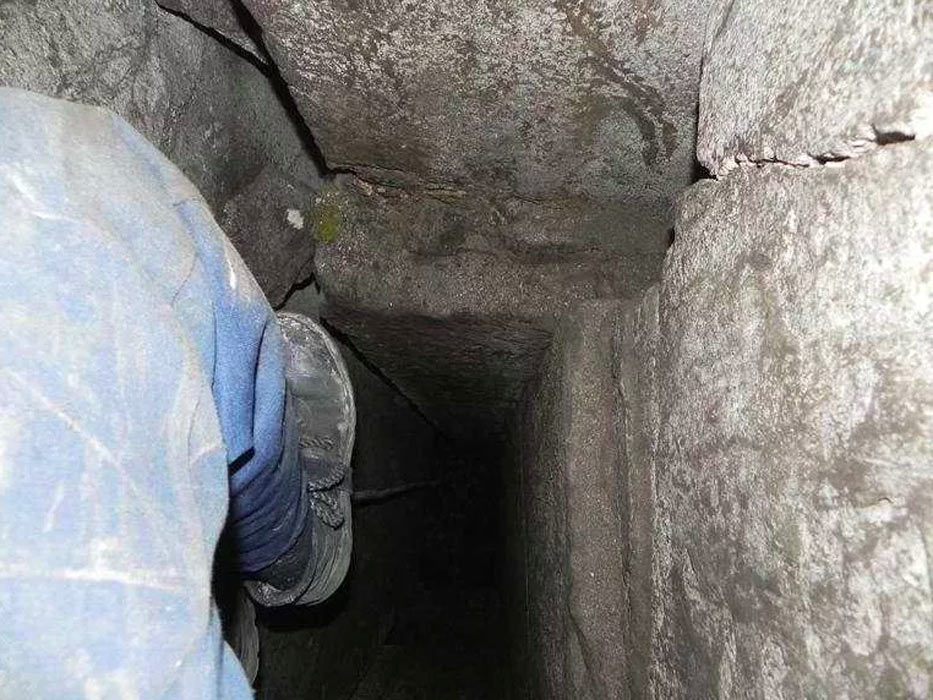
Here are some pictures of the shaft that show it is an artificial construction: Entering the shaft:
The shaft leading into the chamber:
The chamber:
What looks like a stone column:
Parallel and level walls:
Right angle blocks:
|